
There’s nothing more infuriating for a knitter than finding a knot smack in the middle of your ball of wool. You’re peacefully working away, watching your project come to life, and then—bam!—a knot. Not a minor inconvenience, but a glaring, disruptive lump that feels like the manufacturer’s betrayal of your craft. It’s a frustration that can ruin the flow of your work, compromise the look of your project, and leave you wondering why on earth something so basic wasn’t fixed before the yarn made its way to your needles. Let’s talk about why these knots are the ultimate knitting nuisance.
So why are there knots in balls of wool?
Knots in balls of wool occur because, during the manufacturing process, yarn is spun and wound in long lengths. When a break or flaw happens in the continuous thread—whether due to machinery issues or weak spots in the fibers—the manufacturer ties the ends together rather than discarding the damaged section. This keeps production costs lower and reduces waste, but for knitters, it’s a glaring problem. A ball of wool with a knot is essentially a defective product; after all, no knitter buys yarn expecting their project to be interrupted by an unsightly join. It feels like cutting corners at the expense of quality, leaving crafters to deal with the consequences in their carefully planned creations.
I was sitting down this morning, happily working away at a hat that actually I was hoping to sell. Then BOOM. A knot of doom. Look at it in the photo. Massive! I honestly believe that yarn such as this should not be available for sale. I am going to have to undo the entire work in this part of the hat because I can’t possibly sell an item with a knot like that in it.
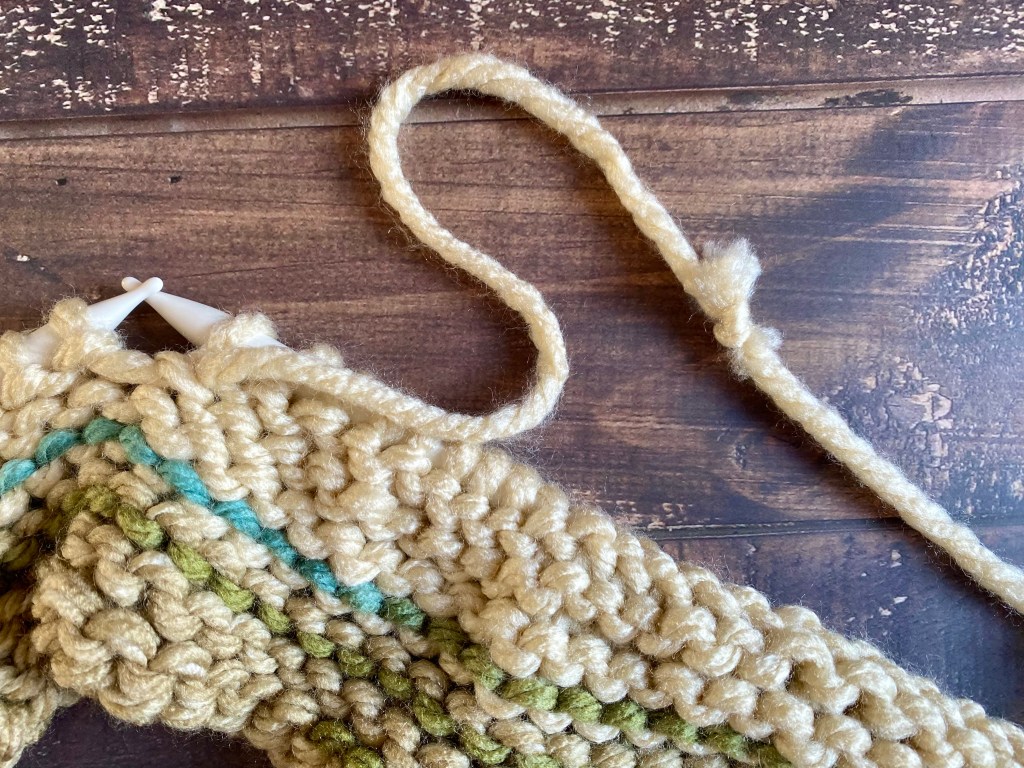
Rubbish.
So why do manufacturers sell this faulty yarn?
Manufacturers get away with selling knotted yarn largely because it has become normalized in the industry. Instead of being labeled as faulty, it’s treated as an acceptable flaw, with most brands citing “industry standards” that allow for a certain number of joins per ball. This shifts the burden onto knitters to work around the problem, often with little recourse unless the yarn is explicitly marketed as “knot-free.” However, in times past, such flaws might have been considered unacceptable. Before mass production and cost-cutting became priorities, yarn was often hand-spun or produced in smaller batches with greater emphasis on quality. Knots were more likely to be seen as evidence of a flawed product, not just a manufacturing inevitability. Today, the prevalence of knots reflects a compromise between efficiency and quality—one that many knitters feel unfairly sacrifices their craft for the sake of profit margins.
Do luxury yarns such as Malabrigo also have knots in?
Expensive yarns like Malabrigo are generally less likely to have knots, but they are not completely immune. Higher-end brands often take greater care in the spinning and quality control processes, aiming to minimize flaws such as knots or breaks. Since their reputation and premium price point depend on delivering superior quality, these brands are more likely to discard or reprocess defective sections of yarn rather than tying them off.
However, even luxury yarns can occasionally contain knots, as no manufacturing process is entirely perfect. The key difference is that premium brands like Malabrigo are more transparent and accountable, often offering better customer service and replacements if you encounter an issue. While you might still find the occasional knot, it’s far less common compared to mass-produced, budget yarns where cost-cutting takes precedence over quality.
I would like to say here that I am a massive fan of Malabrigo and have not yet found any knots in any of the yarn I have bought from this company. I can say the same for Noro and Adriafil. In my experience, cheaper yarns do seem to have more knots, however I do not believe that paying less than ultra premium should mean that faults/knots are acceptable. The super chunky yarn that is the focus of this article wasn’t that cheap anyway!
Conclusion:
When you come across a knot in your work, the best approach is to stop immediately and deal with it before continuing. Cut the knot out and rejoin the yarn using a method that will blend seamlessly into your project, such as a Russian join or a felted join for pure wool. While it’s an extra step, it’s worth the effort to preserve the quality and appearance of your piece.
That said, if you notice a pattern of knots in a particular brand of yarn, it’s time to take a stand. Don’t buy from them again. There are plenty of yarn manufacturers who prioritize quality and understand the importance of delivering a flawless product to crafters. Supporting brands that respect your craft is the best way to ensure your knitting experience is as smooth as the yarn you deserve.
I hope you enjoyed this article about knots in yarn. I shall now go and make a cuppa and then set about undoing my work. Thank goodness I wasn’t too far into the piece before discovering the knot of doom.
What do you think about knots? Part of knitting or an unacceptable flaw in a product?

 The Knitting Times