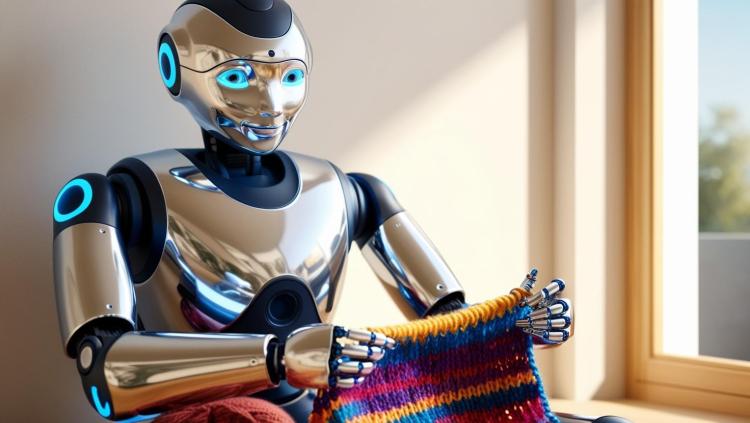
Artificial Intelligence (AI) has become a hot topic in recent years, transforming industries ranging from healthcare to creative arts. But what about knitting? Can a machine really grasp the intricacies of designing a beautiful, functional knitting pattern?
Out of curiosity, I recently asked an AI (ChatGPT) to design a flower motif to go on a knitted hat, only to be met with a baffling and unusable result. This experience left me wondering: how far can AI go in the world of knitting? Will it ever replace human designers, or will it remain a helpful tool? In this article, we’ll explore what AI is, how it’s currently being used in knitting, its potential for the future, and whether designers and pattern creators should feel threatened—or excited—by its growing presence.
Understanding AI and Its Application in Knitting
AI refers to computer systems designed to perform tasks that typically require human intelligence, such as learning, reasoning, and problem-solving. In the context of knitting, AI has been explored for various applications:
Pattern Generation: Tools like purlJam have emerged, allowing users to input ideas and receive instant pattern suggestions. For example, typing “striped beanie with two colors” prompts purlJam to craft a corresponding pattern. I haven’t actually tried this tool yet, will have a go soon and get back to you with the results.
Design Assistance: AI can aid designers by grading patterns for specific or a wider range of sizes, potentially simplifying the design process.
Customisation: AI technologies could enable knitters to personalise designs more easily, tailoring patterns to individual preferences.
Challenges Faced by AI in Knitting Pattern Design
Despite these advancements, AI encounters notable challenges in knitting pattern design:
- Impractical Outputs: Attempts by AI to create patterns have sometimes resulted in impractical shapes and perplexing motifs, highlighting the gap between AI-generated designs and functional knitting patterns.
- Lack of Deep Understanding: AI models often generate text that superficially resembles a knitting pattern but lacks the internal consistency and practical functionality required for actual knitting. This limitation stems from AI’s inability to fully grasp the complexities of knitting techniques and the necessary mathematical precision.
The Future of AI in Knitting
Looking ahead, AI holds potential to complement human designers rather than replace them:
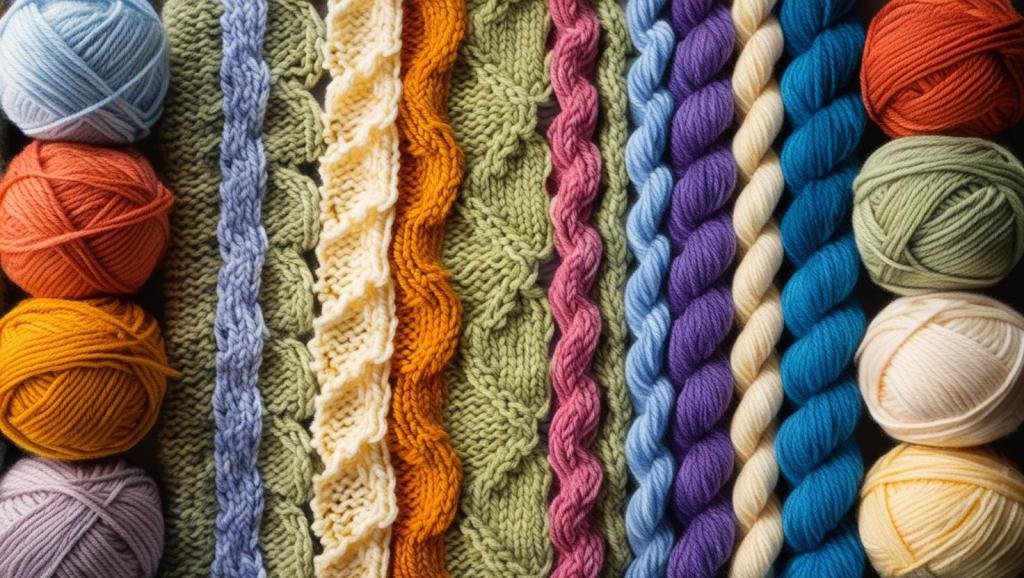
- Enhanced Design Tools: AI could evolve to assist in creating or combining intricate stitch patterns, providing visualisations before the swatching process begins.
- Increased Accessibility: AI might be utilised to translate patterns, making them more accessible globally, and to develop text-to-speech technologies, aiding visually impaired knitters.
- Customisation and Efficiency: AI could help knitters customise patterns to their measurements and preferences, streamlining the creation of personalised garments.
Implications for Designers and Pattern Creators
While AI offers tools that can aid in the design process, the nuanced understanding, creativity, and expertise of human designers remain irreplaceable. AI’s role is likely to be that of an assistant, handling repetitive tasks or providing inspiration, thereby allowing designers to focus on the artistic and technical aspects that require human intuition and experience.
In conclusion, while AI has made inroads into the knitting world, it currently lacks the depth of understanding necessary to independently design functional and aesthetically pleasing knitting patterns. The craft of knitting, rich in tradition and personal expression, continues to rely on the skill and creativity of human designers, with AI serving as a supplementary tool to enhance the design process.

 The Knitting Times